3 Key Things to Consider Before Buying a Lekythos Vase
A lekythos vase is one of the most recognizable forms of ancient Greek pottery, traditionally used for storing oils, especially in funerary or ritual contexts. Buying a lekythos requires more thought than a simple decorative purchase. Here are three important considerations before you invest in one.
The first and most critical factor is whether the lekythos is authentic or a reproduction. Genuine ancient Greek vases are rare, often expensive, and usually come with provenance documentation from reputable auction houses or certified dealers. Many available pieces on the market are high-quality replicas, which can still be valuable but should be clearly labeled as such. Be honest with yourself about whether you want an artifact or a modern interpretation. For example, if you want an authentic piece, ask for provenance documents, bring an expert appraiser with you to evaluate the vase physically, and be aware that it may be a red flag if the surface looks too clean.
Condition plays a major role in both value and visual appeal. Authentic ancient lekythoi are often found in fragments and carefully restored. Examine whether the vase has been repaired, repainted, or reconstructed. Some restoration is acceptable and even necessary for display, but heavy restoration can reduce historical value. In authentic artifacts, avoid mismatched colors, visible glue lines, or surfaces that are too smooth. If you are buying a replica, a potential red flag is that it does not look hand-crafted or has an overly uniform, matte finish. All of these factors can affect the price.
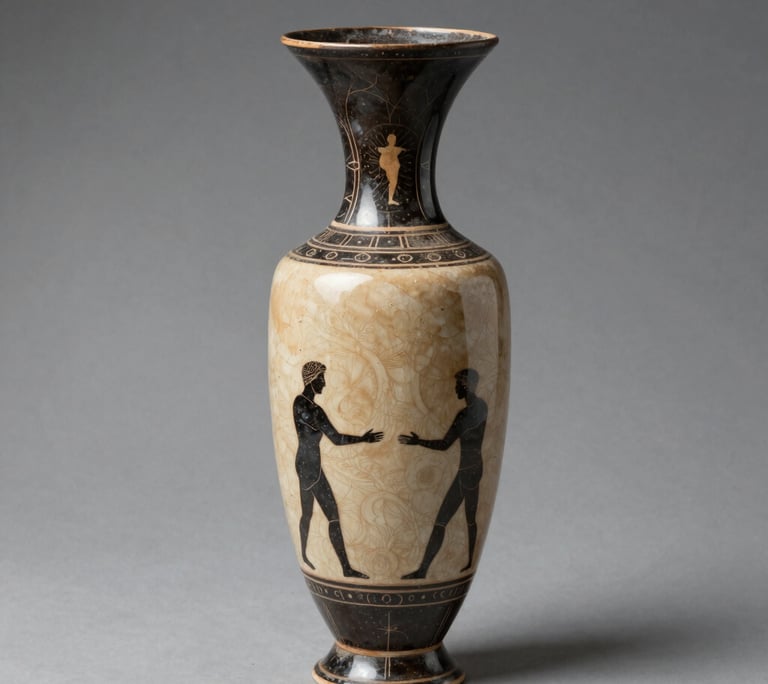
Lekythoi are not just containers; they are rich in cultural symbolism. Many feature black-figure or white-ground painting techniques, often depicting different narratives. Consider what style appeals to you and what fits your intended display space. White-ground lekythoi are associated with funerary motifs, while black-figure designs are more connected to everyday scenes. You must decide which symbolism you prefer.
Final Verdict:
1. Authenticity: If buying an artifact, consider provenance documents, bring an expert appraiser with you, and watch for potential red flags such as a surface that looks overly polished or unnaturally clean.
2. Condition: Major factors to avoid in such artifacts are mismatched colors, noticeable glue lines, or an overly smooth surface.
3. Symbolism: Black-figure designs are often associated with everyday scenes, while white-ground designs usually have funerary motifs.